
Donate
MENU
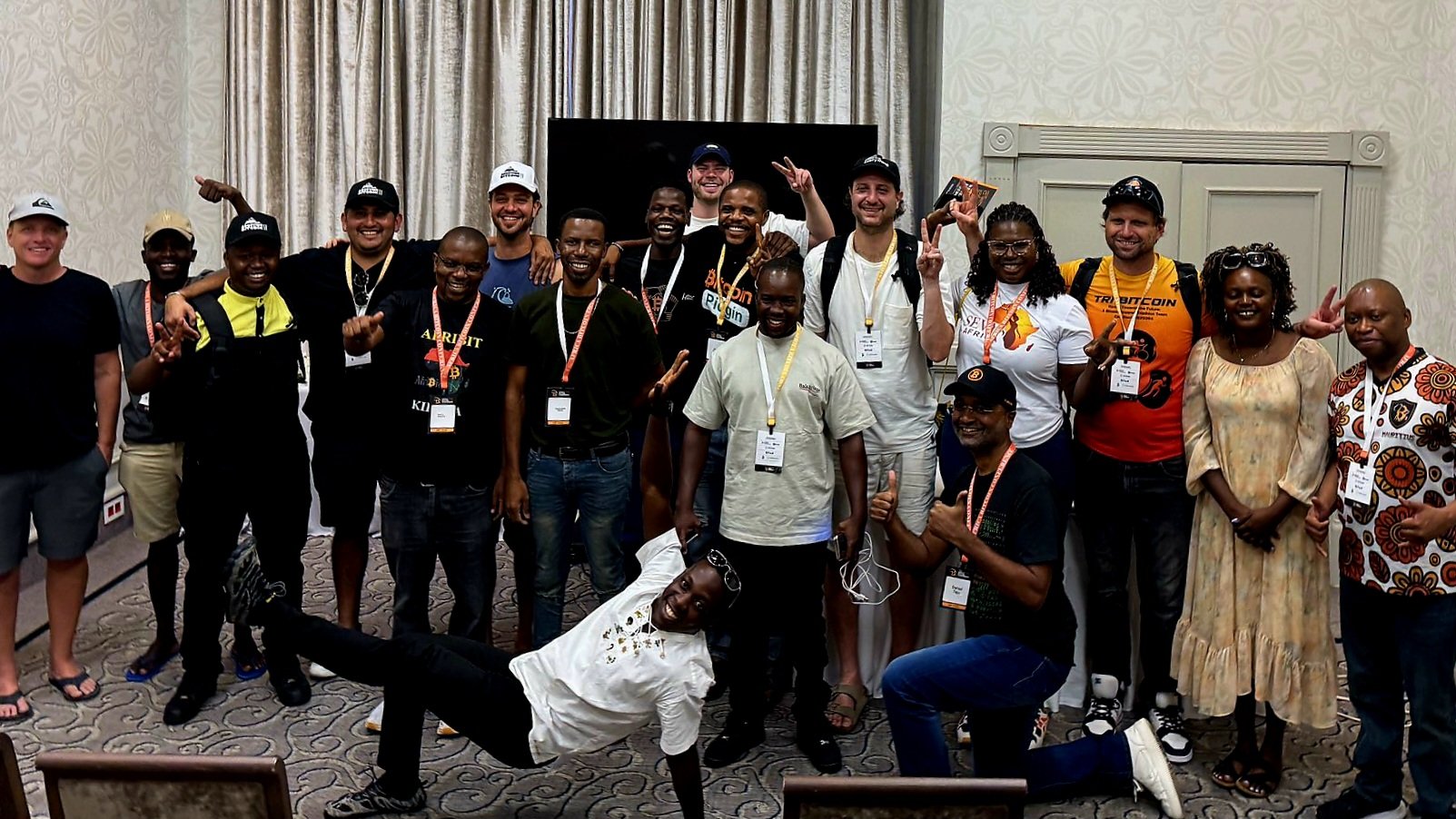
In December 2025, community leaders from across the African continent gathered in Port Louis, Mauritius for the Africa Bitcoin Circular Economies Summit—an Africa-focused convening co-hosted by Bitcoin Beach (El Savador) and the Federation of Bitcoin Circular Economies (FBCE).
The summit was intentionally scheduled alongside the 2025 Africa Bitcoin Conference to maximize collaboration and reduce barriers for African builders already traveling within the region. It marked a major milestone in the global Bitcoin Circular Economies movement and built directly on the momentum of the first-ever global Bitcoin Circular Economies Summit hosted by Bitcoin Beach in El Zonte earlier in 2026.
The rationale for hosting a dedicated Africa summit was both practical and principled. While Bitcoin Circular Economy projects now exist on every continent, Africa has emerged as a major hub for grassroots Bitcoin adoption and is the region with the most accelerated growth of local Bitcoin Circular Economies. This growth is driven by several intersecting realities: persistently weak and inflation-prone national currencies, large proportions of unbanked and underbanked populations, unreliable or exclusionary legacy financial institutions, and a strong culture of community-based economic resilience.
The growth of Bitcoin Circular Economies throughout Africa also stems from efforts by Bitcoin Beach to support the strong interest in establishing local projects (for all the above reasons) through dedicated lines of activity. This includes an Africa BCEs Fund established by Bitcoin Bitcoin to support emerging Bitcoin Circular Economies throughout the continent, and administered by Bitcoin Ekasi in South Africa. It also includes small grant funding for African Bitcoin Circular Economies via two rounds of Bitcoin Beach Grants since 2024, delivered in partnership with the Federation of Bitcoin Circular Economies.
Yet despite this momentum, African community builders face disproportionate obstacles to participating in global forums. High travel costs, limited flight connectivity, and significant visa and travel discrimination routinely prevent African leaders from attending international conferences held in Europe, the Americas, and other regions outside of the African continent. The teams at Bitcoin Beach and the Federation of Bitcoin Circular Economies have experienced these obstacles first hand as numerous attempts to support African builders to participate in global conferences, summits, the Bitcoin Beach Fellowship Program and other opportunities have been foiled by rejected travel visas, prohibitively high travel costs, unreasonable “proof of reserve funds” requirements, and other systemic barriers.
By convening community leaders in Mauritius—geographically accessible, visa-friendly, and host to the 2025 Africa Bitcoin Conference—the summit helped shift the center of gravity closer to where this work is happening for African builders, finding a creative way to work around systemic obstacles. The persistence of these obstacles – financial, governmental, and other – is yet another reminder of why an open-source, decentralized, borderless, peer-to-peer money is critical to reshaping our world and putting people first.
The Africa Bitcoin Circular Economies Summit was designed as a working summit rather than a showcase. The focus was on peer-to-peer learning, practical problem-solving, and shared strategy among community builders who are actively operating Bitcoin Circular Economies on the ground.
Participants exchanged lessons on merchant onboarding, education models, community governance, local liquidity challenges, and building for long-term sustainability. Crucially, the summit created space for African projects to learn from one another directly—recognizing that solutions developed in African contexts often translate more effectively across the continent than models imported from other regions. The summit also welcomed a number of key partners that play a role in helping advance Bitcoin adoption and use, including Blink, Fedi, Machankura and others. Also among those contributing to the summit were the organizers of the Africa Bitcoin Conference and the Adopting Bitcoin, Capetown (South Africa) Conference, a sign of growing partnership and planning to integrate lessons from Bitcoin Circular Economies more fully into the programming of key conference events in future.
Notably, the Adopting Bitcoin Capetown (South Africa) Conference will be hosting daily visits to Bitcoin Loxion, a circular economy in the Capetown area, during its January 2026 conference The conference will also be hosting a full day Bitcoin Circular Economies Summit for African builders immediately following the conference. These efforts would not be possible without the leadership of Bitcoin Ekasi, the continent’s most evolved Bitcoin Circular Economy and its continuous growth over the past few years as an early partner of Bitcoin Beach.
The groundbreaking summit in Mauritius brought together a select group of Bitcoin Circular Economy initiatives from across Africa, reflecting the geographic breadth and diversity of the movement. Participating projects came from:
Together, these community-based projects represent thousands of individuals, businesses and community groups across the continent using Bitcoin as everyday money—earned, spent, saved, and reinvested locally. This is contributing to community empowerment and resilience, setting a model for other communities to learn from.
While Africa has become the region with the fastest growth of Bitcoin Circular Economies over the past two years, the Bitcoin Circular Economies movement itself is increasingly global. Communities in Latin America, North America, Europe, and Asia are applying similar principles: local education, grassroots adoption, merchant-first strategies, and long-term resilience as they establish and grow their own local Bitcoin Circular Economies.
Recognizing this growing momentum, Bitcoin Beach will host the second annual Bitcoin Circular Economies Summit in El Zonte, El Salvador, again in late January 2026, immediately ahead of the Plan B El Salvador conference. This upcoming gathering will reunite projects from around the world, building on the lessons learned at the 2025 summit in El Zonte as well as the recent summit in Mauritius. It is the latest milestone in Bitcoin Beach’s continued mission, in partnership with the Federation of Bitcoin Circular Economies, to advance community-building and community development around the world through Bitcoin adoption and use.
As the Africa Bitcoin Circular Economies Summit in Mauritius demonstrated, the future of Bitcoin adoption is not being dictated from corporate boardrooms or investment desks—it is being built community by community, often under the most challenging conditions, by people using Bitcoin to solve real economic and social problems. Bitcoin Circular Economies are proof of concept engines for the peer-to-peer vision of Bitcoin as a tool for humanity. In 2026, this movement moves to new heights and for the betterment of humans around the world.


